|
Pages: 1 ... 5 6 [7] 8 9 10
61
If I'm being totally honest and not feeling the need to list people like Bach/Beethoven/Mozart or even Debussy/Schoenberg/Stravinsky out of historical necessity, Xenakis would probably be my third favorite composer, but that third place spot can be hotly contested.
Well that's good to hear! 
62
There is no composer who more desperately needs more recordings than GF Haas tbh.
I agree, quite a large chunk is only available on YouTube through private festival recordings. Due to this, I don't have any physical CDs of Haas' work 
63
Have you heard the Trombone Octet yet?
Yep, it was pretty good. I liked it more than the Trombone Concerto
64
« Last post by nathanb on December 02, 2016, 05:13:38 pm »
There is no composer who more desperately needs more recordings than GF Haas tbh.
65
« Last post by nathanb on December 02, 2016, 09:42:22 am »
Indeed. When I say serial, all I really mean is a treatment of music as a numerical output, albeit on an entirely separate set of axes, units, etc. In fact, perhaps my first attempt at serious composition was essentially an attempt to transform and transcribe a Cartesian space into a musical space.
66
Eddie, in all honesty, I think you need to practice a little more before you post any music.
67
I have learned some really useful things as a contemporary composer, from studying those early mature works (the 60s ones)
My favourite Ligeti works are the later pieces like Etudes for Piano, Chamber Concerto, Le Grand Macabre etc
68
Symphony in Three Movements, I think is one of his best works. There is something really elusive about it to me, as well as flashbacks to Le Sacre 
69
Reading about Ligeti and his procedures helped me grasp his music better. I like it that way. This book is good: 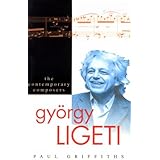 That Phaidon book looks good, although I don't have it. All of the Phaidon series on music are good, with good design, layout, photos and info. I love 'em. 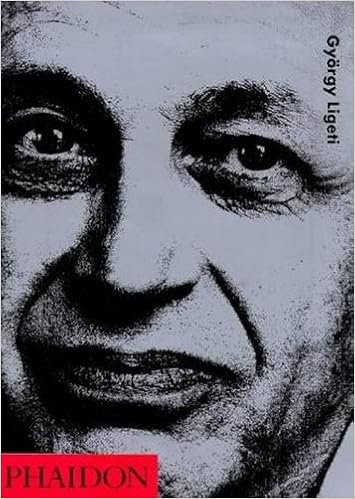
70
As a scholar of the sciences, it is very difficult for me to not associate music with numerical patterns. Whether it's Bach, Mozart, Schoenberg, Stockhausen, Cage, Xenakis, or Haas... I cannot escape the inherent mathematical construction of each and every one of them.
Of course, that's a well-known fact. The Greeks included music as part of the Quadrivium, along with geometry, arithmetic, and astronomy. All modern musical thought, serial or not, shares underlying principles of symmetry and numerical division of the octave; this is just a part of musical thinking, and should not be seen as a separate mathematical way of thinking. John Coltrane studied Slonimsky's Thesaurus of Scales, and his "Giant Steps" embodies principles of symmetry and octave division, and numbers. Music is itself a "geometry of sound," and when we accept this as axiomatic, we can enter a fascinating world of discovery. Of course, when composing or playing, there is a time to just "wing it" and go by intuition; but this should not be seen as in opposition to logic and learning. I don't think that the division between music and mathematical logic is a real one; I think it's just a lazy way of justifying some kind of creative license.
Pages: 1 ... 5 6 [7] 8 9 10
|
Hello, I'm millionrainbows
by millionrainbows
October 04, 2017, 01:23:13 pm
|
The Really Deep Thoughts Olympics
by ModernistAlien
August 24, 2017, 11:14:01 pm
|
Music of an alien?????
by ModernistAlien
August 24, 2017, 11:02:26 pm
|
Hi Eddie Here
by millionrainbows
August 16, 2017, 04:18:16 pm
|
Tips For Serial Writing For A Monophonic Instrument
by millionrainbows
August 16, 2017, 04:15:52 pm
|
Currently reading thread:
by millionrainbows
August 16, 2017, 04:10:16 pm
|
Stockhausen
by millionrainbows
August 16, 2017, 04:02:41 pm
|
Serialism
by millionrainbows
August 16, 2017, 01:42:50 pm
|
Frank Zappa
by millionrainbows
August 12, 2017, 01:08:11 pm
|
I'm an old Classic Rock dude
by millionrainbows
August 12, 2017, 12:47:00 pm
|
|
|

 Home
Home Search
 Arcade
 Login
Login Register


 Recent Posts